How to Build and Maintain Connections Between BIPOC Youth and Their Communities


Dr. Shauna Cooper spends much of her time as a psychologist at the University of North Carolina at Chapel Hill researching how race, culture, and the situations that surround them impact and influence young people. One area of interest includes studying the importance of BIPOC (Black, Indigenous, and People of Color) youth establishing connections between family members and their communities. Dr. Cooper starts by looking at the community itself – where people live, and who they come in contact with – knowing it’s imperative for teens to have a combination of people and structures (schools, community centers, and more) that allow for positive interactions. It’s those interactions that allow teens to build and maintain connections that will help them be successful throughout life. In this Q&A, we discuss how to help teens make connections with their families and communities.
Eden Pontz: What do families need to stay connected and create positive social relationships with their teens?
Shauna Cooper: Look first at how your family is connected already. Then ask, what are some things that might be closely aligned with who your teen is? You can learn a bit of that by being receptive, hearing about the day-to-day needs and experiences of teens, and then thinking about how to help them establish and maintain those connections over time. Ask yourself, “What are ways I can help my child maintain connections with others?” An example is supporting teens’ interests, like volunteering or taking music lessons. Part of the process itself helps parents and teens maintain a connection because the children see caregivers being responsive to their day-to-day needs.
EP: You talk about the value of formal and informal structures that can support young people and promote positive well-being. Give some examples of those structures and how families can access them.
SC: Think about the things in your community, like community centers, schools, or other educational institutions. Also, consider resources that may be important. That could be opportunities to connect with other adolescents or other young people in the community. Libraries or places that encourage hobbies and things that are of personal interest are places to look for. When we think about formal structures, what exists in your community that allows teens to explore things they enjoy doing? Does it offer opportunities for them to connect with other young people and develop lasting relationships with other adults in their community?
EP: Some parents struggle to help their children cope after they’ve had negative experiences based on their race or ethnic background. What are some ways to support them to move forward?
SC: Start by listening to your teen. How do they make sense of the experience? What are the things they feel are important? It can be difficult for parents who have had similar experiences themselves. It’s a balance for caregivers to be mindful of their experiences and distress, and to be responsive about how their adolescents feel. To help promote positive mental health, a positive sense of self, and reduce stress, think about ways to advocate for your adolescent as part of a broader picture.
Have a discussion, making sure that your adolescent feels heard, and is aware that it is okay to not be okay, or to feel sad, or to feel angry about an experience. Then talk through strategies for if this happens again. How would they address this moving forward? There is also important value in young people understanding how to advocate for themselves. A good strategy for parents and caregivers is to model that for them. Model how you advocate within the school or after-school context.
EP: What are some good conversation starters?
SC: First listen to your adolescent talk about what happened. As parents create the space and offer a listening ear that encourages their adolescents to describe the experience, teens can discuss being treated differently due to race or the color of their skin or ethnicity. Sometimes as parents are listening, and after they have heard and helped their adolescent process, they will talk about a similar experience if they have had one. Give adolescents the freedom to say, this is something that made me feel sad, or feel angry, or some other way about their experience. Some questions to ask include, “What are the things that you would change?” “How did you respond in the moment?” “What are some of the things that are important in this situation?” “If you witness or see others being mistreated, what are appropriate strategies to address it? Is it telling another adult?” There are also more formal ways to address the situation, like a school petition, or starting a campaign in their school. But it’s essential for parents and caregivers to give adolescents the freedom to make sense of it in their own way, and to help them think of strategies themselves.
EP: When families or children have experienced racism, or discrimination, what are some cultural elements they may draw upon to help them cope and maintain a sense of well-being?
SC: When trying to help their children navigate experiences with racism and discrimination, there are several cultural practices, elements, and assets they may pull from. Talking about broader experiences with race and discrimination is important. Let them see themselves in different places and spaces and communicate messages surrounding cultural pride — that could come from taking children to cultural events like a Black History Month event, or buying books that have characters that are African American, or are the same ethnic group as your child or other family members, or seeing leaders who come from their communities. Part of the goal of these messages and behaviors is to build a positive sense of identity for adolescents so they view their cultural identity as part of them. It may not be the most important part of their identity, but they need opportunities to develop a positive sense of self in relation to that identity.
EP: What are some of the best ways parents can model maintaining a positive sense of mental health and well-being?
SC: It’s important for young people to see adults expressing a range of emotions. When we are feeling sad or angry, those are often emotions that we are more hesitant to communicate, but it’s important to express all aspects of emotion. It’s an important part of day-to-day reality for young people to see us in moments they feel good about and moments they may not feel so good about. Help-seeking is also a meaningful way to maintain a positive sense of mental health. There are moments when we’re just not okay for whatever reason. It’s an important realization to know that it is okay to reach out for help.
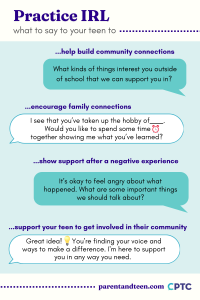
Save this graphic or pin it for later to practice these concepts IRL (in real life):
Also Read This
Related topics for helpful discussions.