

Benefit From Cultural Strengths of BIPOC Families


Dr. Charity Brown Griffin spends time as an Associate Professor at Winston-Salem State University, looking at different factors that influence positive youth development. Focusing on African American youth, she examines how race-related experiences impact identity (how a child sees themselves), socialization (how others and society shape how they see themselves or behave), and academic success. We spoke with Dr. Griffin on the topic of mental health and well-being, including ways to build and help ensure good mental health, identify when a young person may be in distress, and use cultural strengths to support teens. Those strengths are not only critical to well-being but can also help them deal with racism and racial trauma.
Eden Pontz: Parents must support young people’s mental health. What signs should caring adults look for that may signal that a child is in distress?
Dr. Charity Brown Griffin: Caring adults may feel that children are too young or don’t have enough responsibilities to be distressed. However, they should be attentive to signs of distress because mental health is a crucial part of youth development. The signs can vary based on the child’s age. For younger children, a caregiver may see sudden changes in behavior, like becoming withdrawn or clingy. They may see regression, meaning returning to behaviors typical of a younger age, like bedwetting, or changes in behaviors or performance, like a decline in school performance or sudden disinterest in activities they once enjoyed.
In teens, you might see changes in behaviors or performance and other signs such as isolation, withdrawal from friends and family, and spending excessive time alone. Older teens may show frequent or intense mood swings beyond the typical behavior you might expect. Some other signs of distress are significant disruptions in sleep, such as difficulty falling or staying asleep or excessive sleeping. Or you might see older teens engage in riskier behaviors, including substance abuse or talking about feelings of despair, worthlessness, or lack of purpose.
Physical symptoms can also be a sign of distress in younger children and teens. Caregivers might notice complaints of headaches, stomach aches, or other physical discomforts. You may see significant changes in appetite, like eating too much or too little. It’s important to know that signs can appear differently in each individual. But if you notice these signs, you should openly communicate with your child about what’s bothering them. And consider seeing a doctor.
EP: What are some of the cultural strengths within BIPOC (Black, Indigenous, and People of Color) families that help them support their teens?
CG: Many BIPOC families and communities prioritize collective well-being over individual achievement. This sense of community and interdependence can provide teenagers a strong, supportive network as they navigate life. If they face mental health challenges, we know BIPOC families also have the strength of cultural identity, where they can embrace and celebrate their culture as a powerful source of strength. Families that instill a strong sense of cultural pride in their teens can help them develop a positive self-image and sense of belonging that can protect against poor mental health.
Cultural traditions and rituals help foster a sense of community and connection. We also often have extended family networks. Many BIPOC families have extended family structures that involve not only parents and siblings but also aunts, uncles, grandparents, and other relatives who may not be biologically related to them. These extended networks provide additional guidance and support for teenagers, which can also lead to the passing down of wisdom through intergenerational knowledge. We see a strength where wisdom is passed down from the older generation to the younger generation. This intergenerational sharing of knowledge and experiences can provide valuable guidance to teenagers as they navigate life’s journey.
Another cultural strength within many BIPOC families is their strong connection to religion, spirituality, or faith. This can serve as a source of comfort and guidance for teens during challenging times.
EP: How might cultural background impact the presentation of symptoms or how a young person communicates what they’re going through?
CG: Cultural background can play a significant role in shaping what a young person might be going through or how they communicate it. Different cultures have unique ways of expressing emotional distress. Some may be more expressive, while others may prioritize seeming unbothered. We can also consider how some cultures may use nonverbal cues, or body language or artistic expressions to convey emotional struggles.
Cultural values related to the family can impact how young people communicate. If there is a strong emphasis on collective well-being, individuals may prioritize the family’s reputation, for example, over personal struggles. That may result in some stigma associated with seeking mental health support and getting needed help.
We have norms within our families and communities about whether or not we should seek help, and if we do, how we should go about it. Cultural norms help shape whether or not an individual feels comfortable seeking help for mental health concerns. In some cultures, there may be a preference for more informal support networks rather than going to a mental health professional, while in other cultures, seeking professional support may be encouraged.
EP: What are examples of traditional and non-traditional support that families could encourage their young people to turn to when they need help?
CG: When I think of traditional support in our society, mental health professionals are an arm of more conventional support. Mental health professionals include therapists, psychologists, counselors, and social workers. They have the expertise and knowledge to provide tailored support in navigating a potential challenge. Family members, including biological family and extended kin, can also be a form of traditional support. Siblings, parents, grandparents, relatives, or community members who are not necessarily biologically related can provide understanding and comfort. Often in BIPOC communities, we see religious and spiritual leaders as a form of traditional support as well. When those with a religious or spiritual background turn to clergy or spiritual leaders for help, they can offer guidance or counseling for navigating challenging times.
When I think of non-traditional support, I think of individuals who may not be formally trained to provide care and support but are certainly a source of that for youth. Your child’s peers may be a first line of defense. I also think of community spaces like hair salons, barber shops, and the adults at the community rec center. These are spaces where oftentimes BIPOC families may feel safe, cared for, and can find a listening ear. These spaces can be havens that offer a shoulder to lean on to help get through challenging times and circumstances.
To learn more about how the strengths of BIPOC families offer strategies to deal with racism and racial trauma, read more of our conversation here.
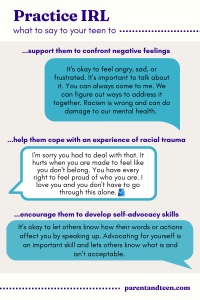
Save this graphic or pin it for later to practice these concepts IRL (in real life):
Also Read This
Related topics for helpful discussions.


