

Why It’s Essential to Support the Real-Life Teen Emotions in “Inside Out 2”


In this article…
Learn the benefits of emotions like anxiety, envy, embarrassment, and ennui
Help teens answer big questions they’re asking themselves
Begin conversations about emotions early and clearly state family values
Use pop culture to get conversations started
It was 2015 when audiences first met 11-year-old “tween” Riley Anderson – and the emotions influencing her brain – in the Pixar film “Inside Out.” From Joy to Sadness, Anger, Fear, and Disgust, these emotions, represented in characters, control her feelings and actions. Fast-forward to 2024 and “Inside Out 2,” where Riley turns 13. As puberty takes over, audiences are introduced to new emotions that have her suddenly acting and feeling different. But these emotions are essential to teens in adolescence.
And while the filmmakers wanted laughs, when it came to successfully depicting these emotions on-screen, Pixar also wanted to ensure they got the details about adolescent development correct. They wanted scientifically accurate messaging that was useful to families seeing the film. So, they brought in consultants Dr. Lisa Damour and Dr. Dacher Keltner to help. Dr. Damour, a psychologist and author of multiple books about the teen years including, “The Emotional Lives of Teenagers,” explains, “There’s tremendous value in people who are creating content for popular culture getting it right because so much of what they create can turn into conversations at home.” These experts know that when parents and caregivers understand the “why” behind what’s happening with their teen’s development, they can better support their teens’ health and well-being.
Meet the New Teen Emotions
The film tackles emotions we’ve all likely experienced during our teens. These new dramatic characters include Anxiety, Envy, Embarrassment, and Ennui. Traditionally, adults thought of these emotions as “bad.” But that line of thought is changing, with science also showing the important upsides to them. Dr. Dacher Keltner is a Professor of Psychology at the University of California, Berkeley, and the author of the book, “AWE: The New Science of Everyday Wonder and How it Can Transform Your Life.” He says these emotions help to “sharpen behavior and gather better information. They help us – both teens and adults – behave more appropriately socially and bring about better ends.” Let’s take a look at these featured emotions.
Understand These New Emotions – The Bad and the Good
Anxiety: This is the feeling of fear or dread – the worry something could go wrong in the future. It may be a normal reaction to stress. Anxiety can be mild or severe. It can cause physical symptoms like sweating, higher blood pressure, or a rapid heartbeat. Some examples of times you might feel anxious are before taking a test, speaking in public, or facing a challenge alone. Sometimes, it can become overwhelming, and for some people, it can lead to panic attacks.
Even though many people consider it a negative emotion, anxiety can help you focus, be aware of your environment, give you energy when needed in some situations, and even help you cope.
Envy: This emotion makes you want what someone else has. It may feel like a combination of admiring something and resenting it at the same time. Sometimes, it may make you feel “less than.”
But, if you think about envy being about you, it may motivate you to try harder. It can alert you to times when you may be performing below your potential. It can help you recognize more about what you want in life, and you can use it to set bigger goals by learning from the success of others.
Embarrassment: This is a feeling of shame, awkwardness, discomfort, and self-consciousness – being concerned with what others are thinking about you. Someone who is embarrassed may be conscious of a real or imagined failure to fit in with friends or others around them.
Researchers believe that embarrassment makes people feel bad about some mistakes as a type of internal feedback, so they learn not to repeat the same mistake. When you’re embarrassed, you may feel physical changes, including blushing, sweating, or stammering.
Ennui: This emotion leaves you weary, bored, and lacking interest in people or things. (It comes from a French word.)
But boredom can help with motivation – encouraging you to make changes, try new things, look for different or new situations, and think about your goals and values.
Importantly, these emotions help teens with things like planning, noticing when they’ve made a social mistake, or knowing better where they fit into their social world. They are essential for teens to experience as they try to answer big questions like, “Who am I?” and “Where do I fit in?”
Dr. Damour encourages parents and other caring adults to recognize that “For young people, these feelings are new. They are intense. They may be very unfamiliar, but they really are an important part of how young people develop and grow.”
Start a Conversation About New Emotions
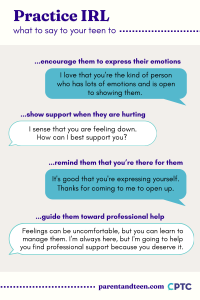
So, how can parents begin the conversation with their teens about the new and changing emotions that often come alongside puberty? Pediatrician Dr. Edith Bracho-Sanchez suggests parents and caregivers need to start the conversations early and state family values clearly. “You can say, for example, ‘This is a period of growth and transition. We will all go through puberty and adolescence together as a family. I will be here for you as you experience new emotions. And I will treat you with respect because teens are the experts at being teens.’” She adds, “Research, common sense, and the experience of so many families who have made it through puberty all show that parents remain a teen’s most trusted source of guidance, advice, and information.”
Offscreen, Dr. Keltner wants both parents and teens to “Watch out for these emotions if they are excessive or if they feel inappropriate to the situation happening when you’re feeling them. But also be easy on yourself when they occur. Remind yourself these emotions have a certain wisdom in them that can guide you in the right way.”
Save this graphic or pin it for later to practice these concepts IRL (in real life):
Also Read This
Related topics for helpful discussions.


